Museum of Innocence... Accident? Murder? Suicide?
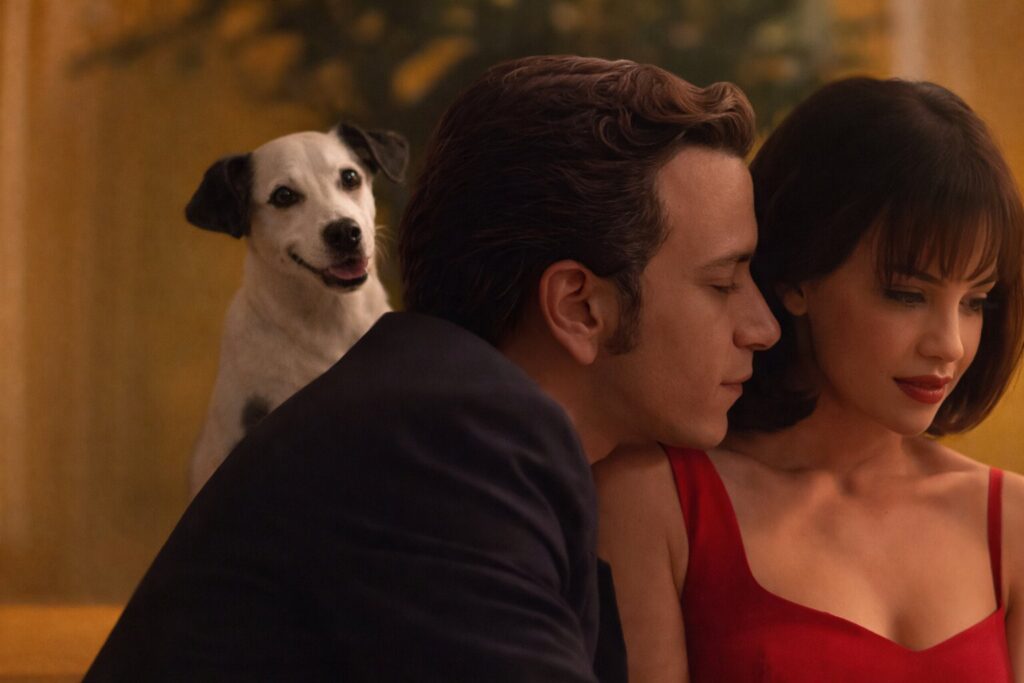
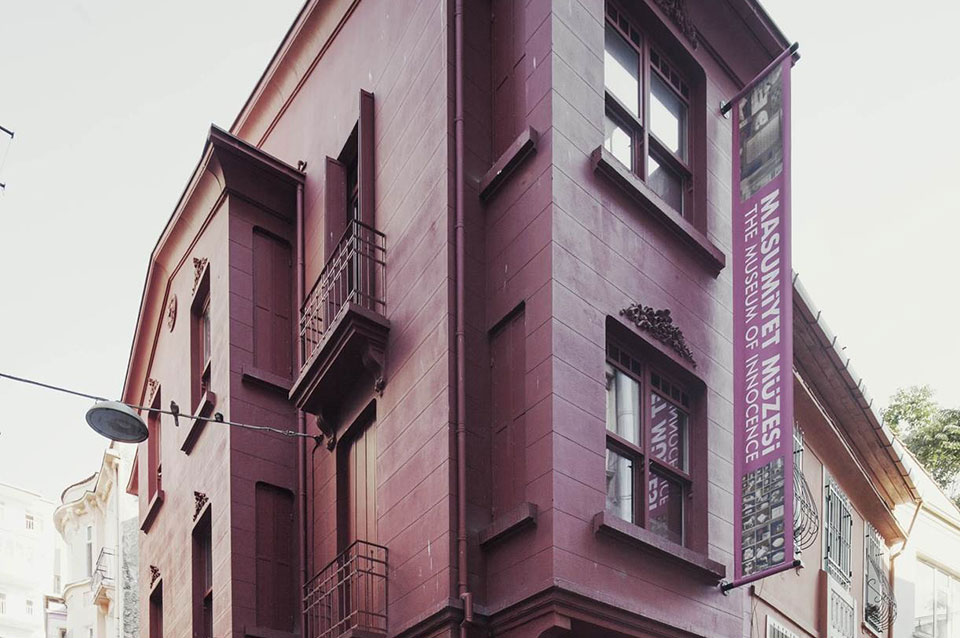
When the new series of Nobel Prize-winning Turkish author Orhan Pamuk's novel The Museum of Innocence, which has also been translated into English, began airing on Netflix, everyone in Turkey started talking about it. Even the real museum called “The Museum of Innocence,” which the author established in Istanbul under the same name, was flooded with visitors. The story revolves around Kemal's obsessive love for Füsun. In this article, we will focus a little on the word innocence. Why did Orhan Pamuk use the word "innocence"? What if no one in the story is innocent? Except, of course, for that dog at the end…
I don't think The Museum of Innocence is a love story. It's a story of possession and being unseen. A story told from a man's perspective. Therefore, we don't fully understand Füsun; we understand more Kemal's conception of her.
So how does the story unfold from Füsun's perspective? Because what is being told is not only a man's intense, obsessive love, but also the gradual fading away of a young woman.
In the story, Kemal loves Füsun not as a subject, but as the source of the feelings she awakens in him, and he wants this source to never cease. He is so blind that he can say, "We were making love so beautifully, then I became infatuated with her. That's what love is like." He is so straightforward that he can say, "When I don't see you, it's a terrible obsession; only when I see you is it love." Even in the midst of their tragedy, he is so selfish that he can talk about her "wonderful cheeks, her velvety lips.". What about Füsun?
From this perspective, Kemal actually "cannot see" Füsun at all, while Füsun either... “"this situation"” She can't see it, or she's taking the risk. So, what about Füsun at this point? Was he deceived or did he deceive? Kemal is obviously a liar. But Füsun is perhaps aware of the risk she's taking. This isn't just a sexual experience. This is a... investment in connection. So why would she take this risk with a man who is engaged and about to get married?
But pursuing a dream by saying "I am patient" is futile, because Kemal will never prioritize Füsun's feelings. Even when he says at the end of the story, "I wanted to tell everyone about this secret world I carried inside," and when he says, "I want to buy this whole building," he is still a prisoner of his own emotions. The man only looks through his own narcissistic window, while what Füsun wants is to be seen. This is a very tragic encounter. Kemal is looking. Füsun wants to be seen. But being looked at and being seen are not the same thing.
Füsun is actually a young woman who wants to trust. His dream is to be a movie star. This goal isn't just a desire for fame; it's also a desire to be seen. So it's not just Kemal, by everyone To be seen, to be liked, to be approved. For Füsun, Kemal is not just a romantic encounter. He is also a "stepping stone," a validation, a transition to adulthood. Because in her eyes, Kemal is not just a desirable man; he is a man of status, wealthy, powerful. The man she dated before Kemal was also a wealthy businessman.
Kemal, however, traps her in a secret relationship, turning her into an object. He takes her from the window of a boutique in Nişantaşı and places her in the back room of his own house. At this point, Füsun's contradiction is this: Why would a woman who wants to be seen agree to an invisible relationship? Because her connection to Kemal wasn't just love; it was also a dream of growth through him. Perhaps she had dreamt too big dreams before she had matured enough, and she had taken great risks for them. Füsun was hurt by being unseen, but how much could she see herself?
Füsun's departure from Kemal and her disappearance is perhaps the only active and influential move in the story. She is the one who leaves and takes control. She is aware that Kemal will risk everything to return. When Kemal re-enters her life, Füsun's refusal to divorce him is a continuation of this active move. That is, gaining power by maintaining a degree of uncertainty. However, this separation and return does not turn into a healing process. Because what is hurtful for both sides is not from the other's perspective, but..., They have something incomplete within themselves. At this point, is Füsun really a passive victim, as everyone says? I think if she were passive, she wouldn't have taken such a big risk, nor would she have made such an active move as disappearing afterwards. Füsun is actually not passive, despite her age, but an active person, and she is aware of her choices. Her choosing a film screenwriter to marry is also an example of this. Of course, this doesn't mean she isn't in love with Kemal and doesn't want him. However, women generally cling not to men as subjects, but to a sense of security that will allow them to live their dreams.
Is power really what Füsun is looking for?
Women generally don't want heavy loads and rough work. Instead, they prefer to beautify the details. Fusun's mother is aware of this when she says of her son-in-law, "He's a kind-hearted boy, but also very weak." She wants a husband who can open up this space for her daughter. Kemal, in the end, finishes off both protagonists with a single shot, saying, "Were you afraid to go down these paths without a strong man by your side?" But he doesn't realize one thing..., What Füsun is looking for isn't actually power.. What he seeks is a sense of security where he doesn't have to worry about all of this while meticulously planning his life. When he doesn't find that security, his respect and desire die. And he completely shifts to the rational side. Let's not forget that men are romantics who appear rational, and women are rationals who appear romantic. Which is perfectly justified from a woman's perspective; we certainly can't criticize that.
In the male narrative, this story appears as a great, romantic, passionate love, but from the female perspective, the picture is very unsettling. For a young woman, not being at the center of life, "remaining hidden," is already a heavy psychological burden, and on top of that, there's the loss of her emotional investment. Kemal collects objects. Füsun, on the other hand, has to piece together her shattered self. Ultimately, Kemal is an incorrigible personality. But is Füsun just a woman who wants to be seen only by her lover? Or to be seen by everyone Would he risk taking on more? With a sarcastic look, Füsun said, "I'd actually like to play the despised poor relative in the film Kemal was going to shoot," clearly expressing her ambition. Kemal wouldn't let go of Füsun. But Füsun didn't want him to let go either.
So where does love fit into all this? Did Füsun fall in love with Kemal with an intensity that bordered on hatred? Or did she hate not being chosen by him? Even as she bit Kemal's lips, she couldn't actually extinguish her resentment and bitterness towards him. True love, however, doesn't progress through resentment, ego, and tactics like in this story; it flows if it's meant to. A sick kind of love says, "I'm incomplete without you." In this story, both of our protagonists are incomplete. Neither of them is fully formed yet. True love says, "I am already complete, but with you I am even more." True love is the ability to maintain one's inner wholeness in the presence of another. It's not an expectation of completion, but an expectation of companionship. Being together is not a necessity stemming from a lack, but a choice. When you leave, there is no void, because you are already complete. Therefore, if the relationship ends, it doesn't mean the world will end, museums and temples will not be built. You stay on your feet because you're holding on to yourself, not to something that's gone. In short, this story is not about love or falling in love; It's a story of not being able to have, not being seen, and not being able to go.
Okay, Kemal never actually saw Füsun. Because he always looked at things from his own perspective.
So, Füsun, ever... “"Could he see it?"” Perhaps she took the risk even though she saw the real Kemal. She was ambitious and determined. Her and her mother's decision to falsify her age to participate in a beauty pageant was also a risk they shouldn't have taken, and it ended badly. In youth, risk means excitement; in maturity, risk means calculation. When young, one looks at a precipice and thinks, "What a beautiful view one could fly over." When mature, one looks at the same precipice and calculates its depth. And right in the middle of the scales of impulsive courage and calculated courage lies... experience There is. As people live, they don't take fewer risks; they just see the cost of those risks more clearly.
If Füsun had taken the risk with prudence rather than passion, she would have steered the car towards the first flashy, oversized, visibility-restricting vehicle that came into her path, pointing it towards the sun, that is an external factor He would turn his gaze not to the tree-filled sunflower fields that determined his direction, but to the wheat fields where he could see ahead. But Füsun took her direction from Kemal. From his perspective, his choices, his world. Wheat, however, does not turn to a single light. It is connected to the soil. It grows with its roots.
“The wheat ear bends as it fills.”"You too can see ahead in sown, full fields. Bending down is not weakness. Sometimes, bending down is being aware of your weight.".
Are the items in this death museum fragments of a life shattered in an accident? Evidence of murder? Suicide letters? Or all of them?